
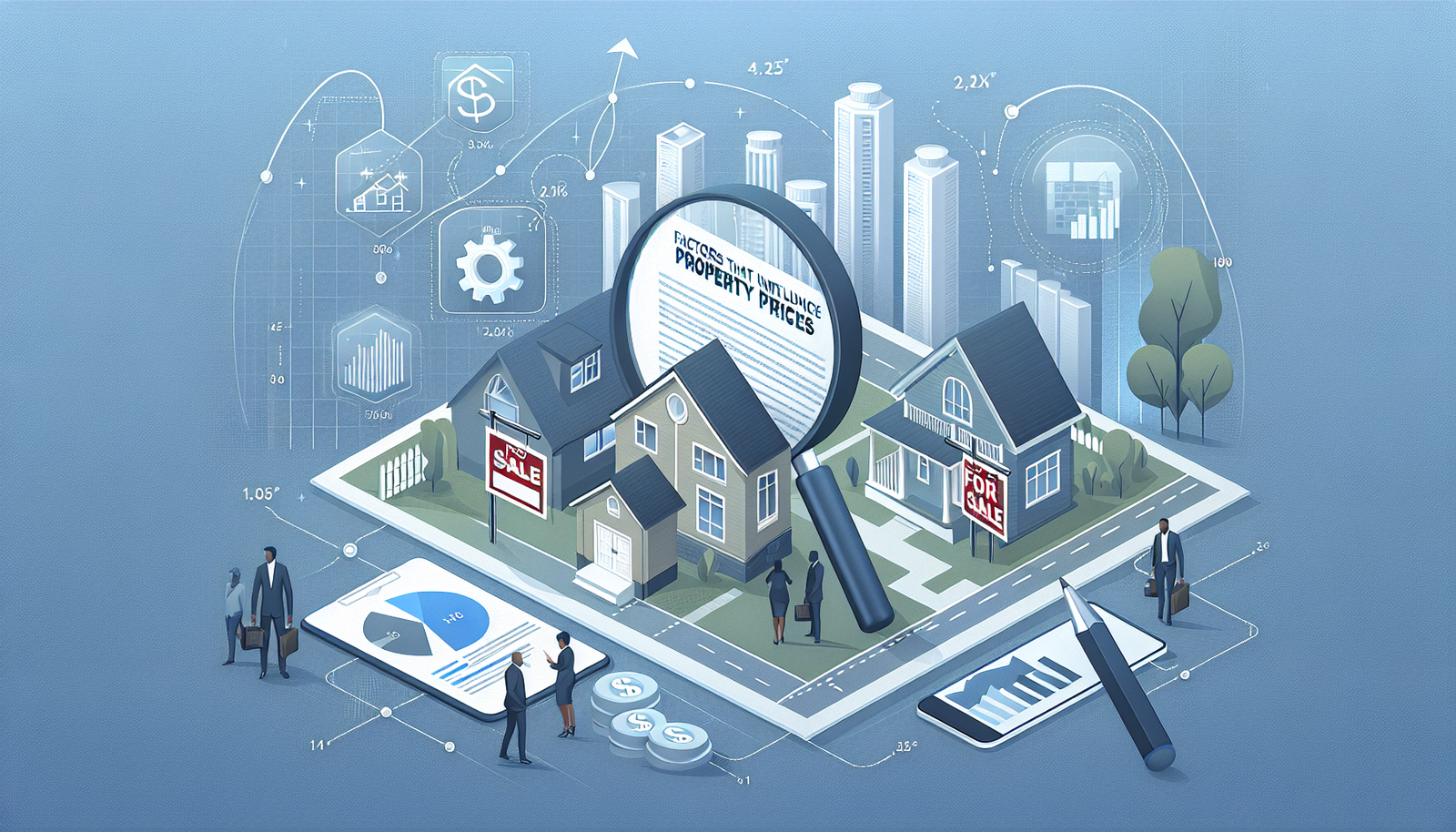
Key Points
- Economic Indicators: Explore how inflation, interest rates, and employment levels directly impact property prices.
- Location Matters: Learn how neighborhood characteristics and amenities can elevate or sink property values.
- Market Trends and Demand: Understand how buyer demand and market trends shape the landscape of property pricing.
Economic Indicators: The Backbone of Property Prices
Ever noticed how prices at the grocery store seem to fluctuate every time you check? Well, property prices are similarly impacted by economic indicators. Trust me, I’ve been knee-deep in real estate for over ten years, and I can tell you: when the economy sneezes, the property market catches a cold.
Take inflation, for instance. When inflation rises, so do the costs of building materials and labor, pushing sellers to raise their prices. I remember back in 2021, when lumber prices skyrocketed due to supply chain issues, causing new home prices to leap by thousands of dollars. On top of that, interest rates play a critical role. When they’re low, more folks can afford mortgages, which boosts demand. But if you look at trends from last year, when rates went up, you could practically feel the market cool as buyers pulled back.
And let’s not forget about employment statistics. When people have jobs, they buy houses. Simple as that. During the economic recovery post-pandemic, employment levels surged, and you could see it reflected in rising property prices across many markets.
Now, here’s the deal: while economic indicators can be a bit of a rollercoaster, keeping an eye on them can help you predict the direction property prices might take. So if you’re considering investing, watch those reports like a hawk! The truth is, understanding these factors provides you with a better grasp of when to buy or sell, which can be the difference between making a killing and just breaking even.
In my experience, savvy investors don’t just follow the crowd; they analyze the broader economic landscape and make informed decisions based on solid data.
The Role of Inflation
Inflation doesn’t just impact groceries; it directly affects property prices. The higher the inflation, the higher the prices. When I bought my first home in 2013, inflation was relatively stable. But in recent years, we’ve seen inflation rates jump to levels unseen since the ’80s. You can imagine how this creates a ripple effect in real estate, as sellers adjust prices to maintain profit margins.
Interest Rates Make or Break Sales
Let’s face it: interest rates are like the weather in the real estate world. A rainy day leads to fewer buyers. A sunny one? Bring on the offers! Higher rates can deter potential homebuyers and subsequently cool down the market, while lower rates can spur a buying frenzy. I recall the frenzy during 2020-2021; it was like a celebration at a block party. Everyone wanted a piece of the pie while rates dipped below 3%.
Location Matters: Understanding Neighborhood Dynamics
You’ve heard the expression ‘location, location, location,’ right? Well, it’s not just a real estate cliché; it’s a golden rule! If you want to see your property values soar, you need to think about where your potential investment is located. Think back to the time I visited San Francisco. The prices in neighborhoods like Nob Hill were eye-watering compared to those in less trendy areas like the Excelsior. Why? It had everything to do with amenities, schools, and, of course, that breathtaking view of the Bay!
Let’s dive into it. Schools are a huge factor here. Families are often willing to pay a premium for homes in areas that boast good school districts. I can’t count the number of parents I know who’ve stretched their budgets just to move into those coveted school zones. Coupled with crime rates, public transport availability, and local attractions, the attractiveness of a neighborhood can take a dilapidated property to new heights—sometimes adding tens of thousands to its value.
But here’s the kicker: as location can increase a property’s worth, it can also sink it. I live in a city where a once-thriving downtown has seen a spike in crime rates and a drop in foot traffic. You guessed it: property prices plummeted. A year ago, you could snag a quaint apartment for, say, $400K. Fast forward to today, and those same places are listing for $300K. Homebuyers are savvy, and they notice these trends. I often tell my clients to take a stroll around the neighborhood at different times—what feels safe and lively during the day can be a deserted ghost town by night.
In the end, doing your homework when it comes to location isn’t just smart; it’s essential. You want a property that’ll appreciate over time, right? Well, the location you pick today could define your investment profit tomorrow.
The Importance of Schools
I often tell friends that good school districts are like gold in the real estate world. In my small town, homes in the district with top-rated schools sell 20% higher than those in districts that aren’t as well-regarded. That’s a significant difference for families looking for long-term investments.
Safety and Amenities
People are looking for peace of mind when they buy. If a neighborhood is struggling with crime, it’s nearly guaranteed that property prices will be negatively impacted. Combine safety with great local amenities—think parks, cafes, and public transport—and you’ve got a recipe for skyrocketing values.
Market Trends and Demand: Riding the Waves of Change
Let’s chat about market trends and demand. If there’s one thing I’ve learned from being in real estate, it’s that the market can shift at the drop of a hat. Remember the crazy bidding wars of 2020? Everyone wanted a piece of the action, and properties were selling for staggering amounts. I would chat with friends and clients who were baffled by multiple offers on homes within days of listing, often exceeding asking prices by tens of thousands.
Demand drives prices, and if supply can’t keep up, you’ll see the market heat up. Take a look at places like Austin, Texas. When COVID hit, folks began fleeing city life for the suburbs, causing demand to skyrocket in previously affordable neighborhoods. The prices shot through the roof! Overnight, houses that were once within reach became exclusive listings—$50,000 to $100,000 above market value. I mean, it was wild!
But here’s the catch: when demand decreases, which it often does, especially during economic downturns, property prices can tank just as quickly. I’ve seen it happen firsthand. During 2008, many homeowners were left scratching their heads as their investments evaporated. The reality is that you can’t entirely predict these shifts, but staying alert to market changes can help you navigate them successfully.
Understanding local market trends can also make a difference. If you notice new infrastructure developments—maybe a new tech hub is coming to town—that’s a sign that demand could increase in the area soon. In my experience, always be on the lookout for the next big thing. It could make all the difference for your investment.
Bidding Wars and Buyer Behavior
When bidding wars heat up, it ignites a frenzy. I’ve watched buyers go above and beyond to snag a property—making offers well above asking price, sometimes without even seeing the house first. Talk about a wild real estate world! Understanding these buyer behaviors can give you a leg up in a competitive market.
Impact of Economic Cycles
The economy goes through cycles, and so does real estate. Understanding whether we’re in a boom or bust period can help you plan strategically. For example, knowing whether it’s a seller’s or a buyer’s market can set you up for success—granting you leverage when negotiating prices.
External Factors: The Wild Cards of Property Pricing
Lastly, let’s not skip over external factors—those wild cards that can swing property prices dramatically. Think natural disasters, political changes, and economic policies. I’ve seen firsthand how a natural disaster can wipe out houses, literally. A friend of mine had a beautiful duplex on the Gulf Coast, and it was wiped out by a hurricane. The property values in the surrounding area plummeted overnight, leaving many home and business owners reeling from the financial impact.
Then, there are political decisions that can shake things up. Take rent control laws; these can create a ripple effect in property markets, shifting how investors perceive their holdings. Just think about New York City—rising rent control measures often make it hard for landlords to maintain or improve their properties, leading to a decline in overall building quality and, eventually, property values.
And don’t underestimate the power of powered economic policies, like changes to property tax regulations. I recall a time when a proposed tax hike in a small town made potential buyers think twice. The very thought of increased taxes had them running for the hills, impacting prices in that area significantly.
In short, these external factors can surface unexpectedly and cause significant waves in the market. My advice? Stay in the loop on local news and political changes—those wild cards can sometimes be the biggest influencers of property price shifts.
Natural Disasters and Their Ripple Effects
Whether it’s wildfires in California or hurricanes in the Southeast, natural disasters can decimate local real estate. Once, after a hurricane, I watched as an entire neighborhood’s values dropped by a staggering 40%. The aftermath can take years to recover from, often pivoting market dynamics.
The Political Landscape
Political uncertainty can also play a huge role. When elections approach, uncertainty often leads buyers to hesitate. I’ve seen neighborhoods stagnate in value during election years—no one wants to commit when they’re unsure of future policies.