
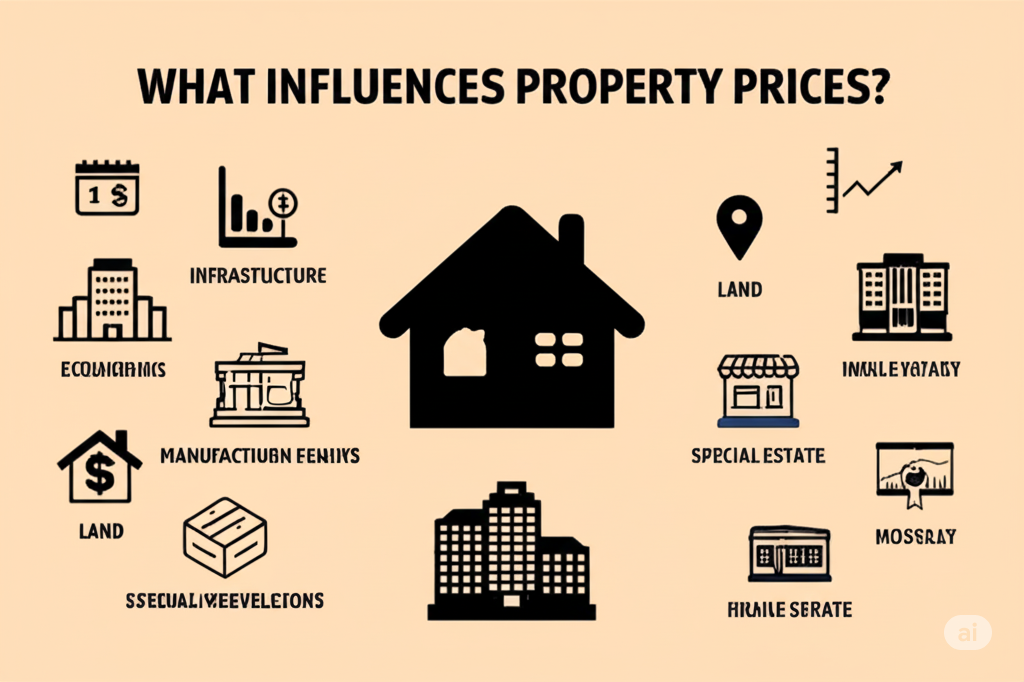
Buying or selling a property is a significant financial decision, and understanding the factors that influence property prices is crucial. Whether you’re a first-time homebuyer, a seasoned investor, or simply curious about the real estate market, knowing what drives property values can empower you to make informed choices. Here are some key elements that play a significant role:
1. Location, Location, Location:
This age-old adage holds true. The location of a property is arguably the most significant factor influencing its price. This encompasses several aspects:
- Proximity to Amenities: Properties close to essential amenities like schools, hospitals, shopping centers, public transport, and recreational facilities tend to command higher prices. In Bhubaneswar, for instance, properties in well-connected areas like Patia or Chandrasekharpur often have a premium.
- Neighborhood Characteristics: The desirability of a neighborhood, including its safety, reputation, aesthetic appeal (green spaces, well-maintained streets), and community vibe, significantly impacts property values. Upmarket areas in Bhubaneswar like Nayapalli or Saheed Nagar often see higher property values due to these factors.
- Future Development: Planned infrastructure projects, such as new roads, metro lines, or commercial hubs, can positively influence property prices in anticipation of improved connectivity and convenience. The ongoing infrastructure development around Bhubaneswar can be a key factor for future price appreciation.
- Environmental Factors: Proximity to natural attractions like beaches or parks can increase property value, while areas prone to flooding or pollution may see lower prices.
2. Economic Conditions:
The overall health of the economy plays a vital role in the real estate market:
- Interest Rates: Lower interest rates make borrowing money for mortgages more affordable, increasing demand and potentially driving up property prices. Conversely, higher interest rates can cool the market.
- Employment Rates: Strong employment rates generally lead to greater consumer confidence and purchasing power, boosting demand for housing.
- GDP Growth: A growing economy often translates to higher incomes and a greater ability for people to invest in property.
- Inflation: Rising inflation can impact the cost of construction materials and labor, potentially affecting new property prices.
3. Supply and Demand:
The fundamental economic principle of supply and demand significantly impacts property prices:
- High Demand, Low Supply: When there are more buyers than available properties in a particular area, prices tend to increase due to competition.
- Low Demand, High Supply: Conversely, if there are many properties available and few buyers, prices may decrease as sellers compete for attention. Factors like population growth, migration patterns, and the rate of new construction influence this balance.
4. Property Characteristics:
The features and condition of the property itself are crucial determinants of its value:
- Size and Layout: The square footage, number of rooms, and overall layout of a property directly influence its price.
- Age and Condition: Newer properties or those that are well-maintained and recently renovated typically fetch higher prices than older or dilapidated ones.
- Features and Amenities: Special features like updated kitchens and bathrooms, smart home technology, swimming pools, and landscaping can add value.
- Energy Efficiency: Increasingly, buyers are considering the energy efficiency of a property, with features like solar panels or good insulation potentially increasing its appeal and value.
5. Government Policies and Regulations:
Government policies can have a substantial impact on property prices:
- Tax Incentives: Policies offering tax breaks for homeownership can stimulate demand.
- Land Use Regulations: Zoning laws and restrictions on development can limit the supply of land and thus influence prices.
- Stamp Duty and Registration Charges: These costs associated with property transactions can affect affordability and market activity.
- Housing Schemes: Government-backed affordable housing schemes can influence prices in certain segments of the market.
Conclusion:
Property prices are influenced by a complex interplay of various factors, from the micro-level of a property’s condition to the macro-level of the national economy. Understanding these influences can help buyers make informed decisions, sellers price their properties competitively, and investors identify potential opportunities in the real estate market . Keeping an eye on local developments, economic trends, and government policies is key to navigating the dynamic world of property prices.

