
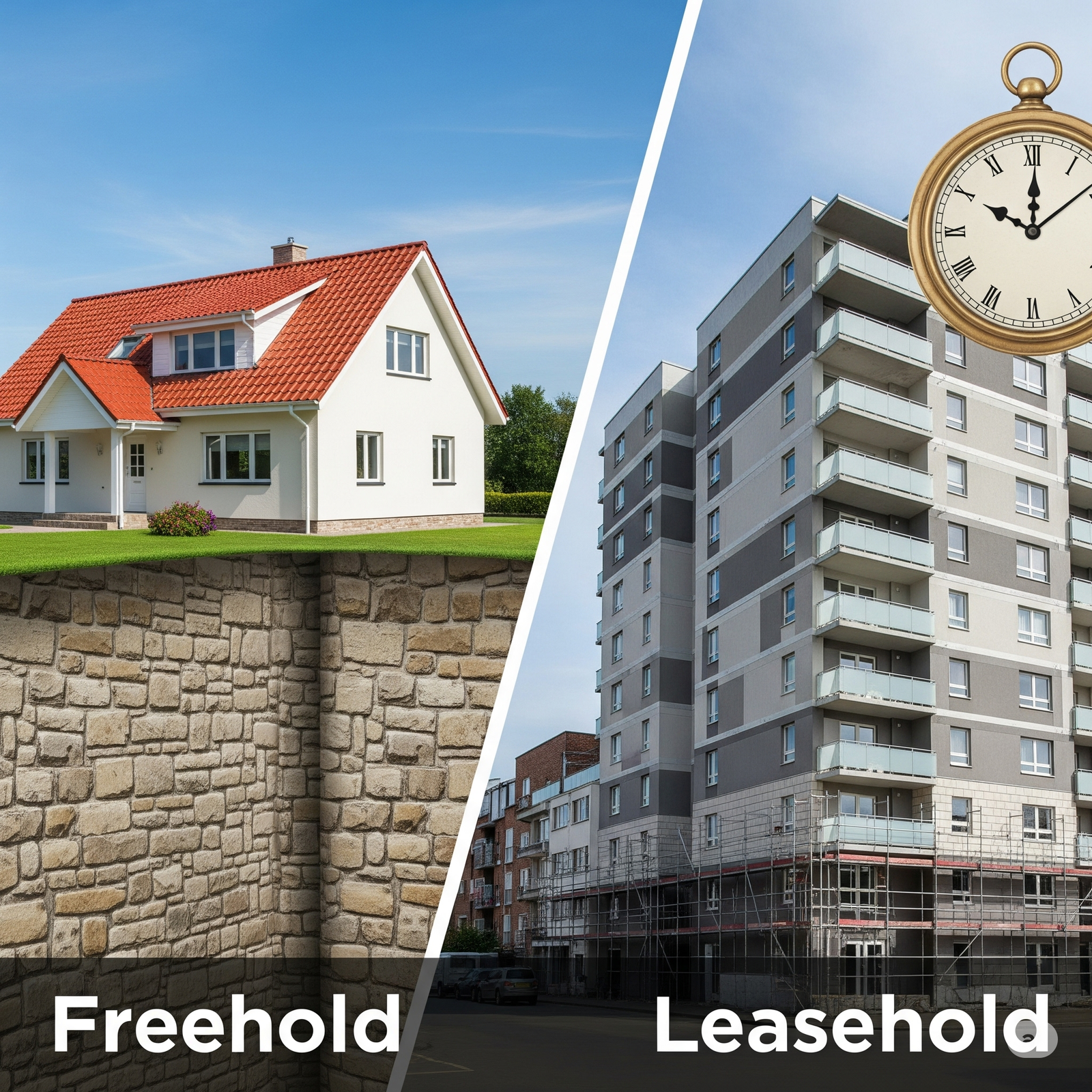
When venturing into the world of real estate, you’ll often encounter the terms “freehold” and “leasehold.” Understanding the fundamental difference between these two types of property ownership is crucial for making informed decisions, whether you’re buying a home or investing in commercial property. This blog post will break down the key distinctions.
Freehold Property: Owning It All
In a freehold or “absolute ownership,” you, as the buyer, own both the property and the land it sits on indefinitely. This means you have complete control and rights over the property, subject to local laws and regulations.
Key Characteristics of Freehold Property:
- Ownership of Land and Property: You possess the title to both the building and the underlying land.
- Perpetual Ownership: Your ownership lasts forever and can be passed on to your heirs.
- Full Control: You have the freedom to make alterations, renovations, or even demolish and rebuild (within legal limits) without needing permission from a landlord.
- Responsibility for Maintenance: You are solely responsible for all maintenance, repairs, and upkeep of the property.
- No Ground Rent: You don’t pay any periodic ground rent to a superior landlord.
Leasehold Property: Rights for a Limited Time
In contrast, leasehold property means you own the right to occupy and use a property for a specified period, as outlined in a lease agreement with the freeholder (also known as the landlord). You don’t own the land itself, and your ownership rights are temporary.
Key Characteristics of Leasehold Property:
- Ownership of the Right to Occupy: You purchase the right to live in or use the property for a fixed term.
- Limited Ownership Period: The lease has a specific duration, which can range from a few years to hundreds of years.
- Restrictions and Permissions: The lease agreement will contain covenants and conditions that you must adhere to. Significant alterations or renovations often require the freeholder’s permission.
- Service Charges and Ground Rent: Leaseholders typically pay service charges for the maintenance of communal areas (e.g., hallways, gardens) and may also have to pay ground rent to the freeholder.
- Reversion of Ownership: At the end of the lease term, ownership of the property reverts back to the freeholder unless the lease is extended.
Key Differences Summarized:
| Feature | Freehold Property | Leasehold Property |
| Land Ownership | You own the land | Freeholder owns the land |
| Ownership Term | Perpetual | Fixed term (as per the lease) |
| Control | Full control (within legal limits) | Subject to lease terms and restrictions |
| Ground Rent | Not applicable | Often payable to the freeholder |
| Service Charges | Solely your responsibility | Usually payable for common areas |
| Inheritance | Can be passed on to heirs | Lease can be assigned or inherited, but for the remaining term |
Export to Sheets
Common Examples:
- Freehold: Most detached and semi-detached houses are sold on a freehold basis.
- Leasehold: Flats and apartments are commonly sold as leasehold properties. Some houses, particularly in planned estates, can also be leasehold.
Which is Right for You?
The choice between freehold and leasehold depends on various factors, including your budget, long-term plans, and tolerance for restrictions and ongoing costs. Freehold offers greater freedom and long-term security but often comes with a higher initial price tag and full maintenance responsibility. Leasehold can be more affordable initially, but it involves ongoing costs and limitations.
Understanding these fundamental differences is the first step in making a well-informed decision when navigating the property market. Always seek legal advice before committing to a property purchase to fully understand the terms and conditions involved.

